


Blog
Sea buckthorn: what you don’t know about the Baltic’s golden berry

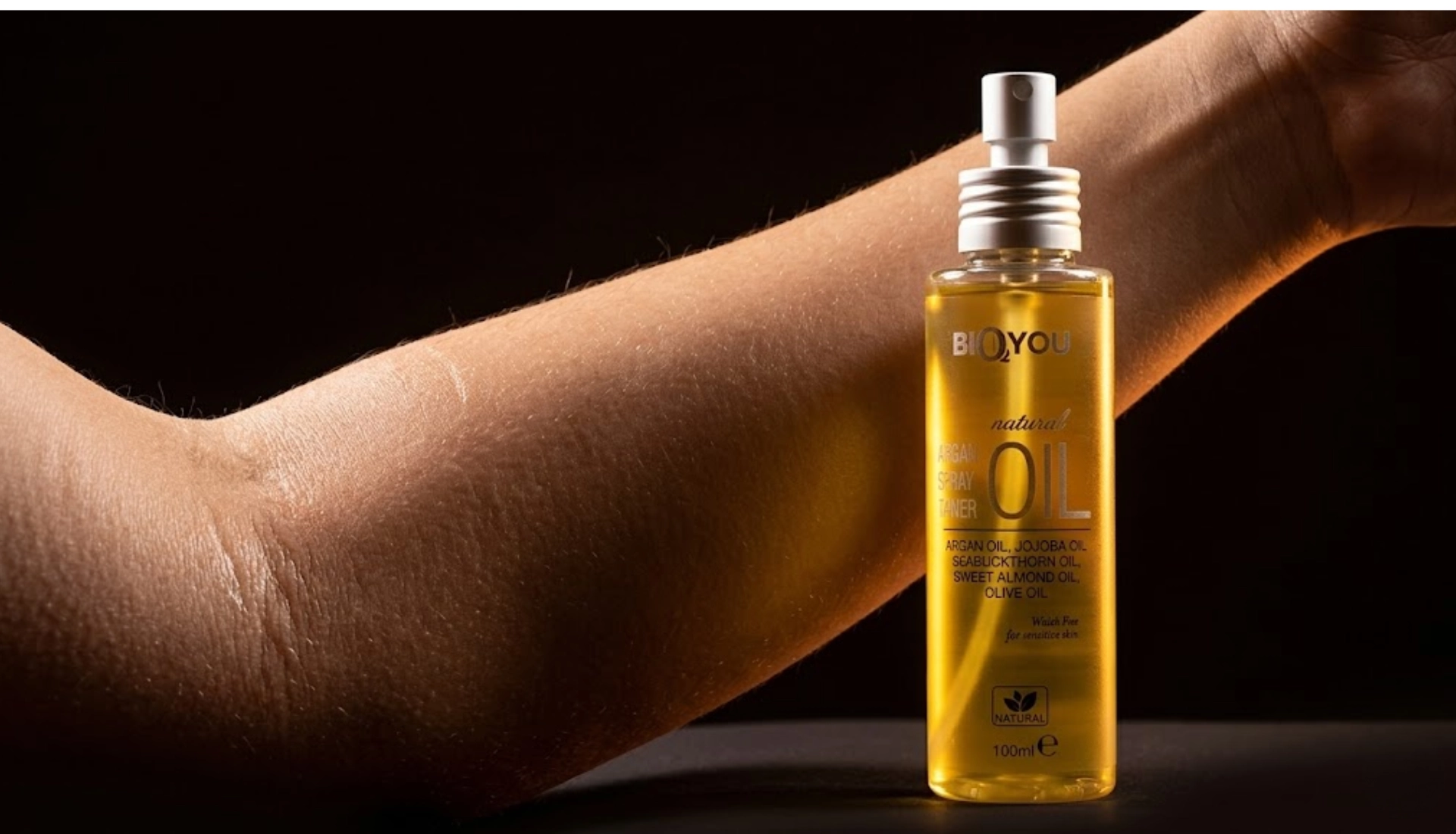
Most people encounter sea buckthorn for the first time as a sour juice or an ingredient on a label they can’t pronounce. Hippophae rhamnoides. It sounds pharmaceutical. What it actually is: a hardy, thorny shrub that grows wild across Northern Europe and Central Asia, and one of the most compositionally unusual plant oils in cosmetic formulation.
At Bio2You, it’s been our hero ingredient from day one. Here’s why that’s a chemistry argument, not a marketing one.
What is sea buckthorn?
Sea buckthorn (Hippophae rhamnoides) is a fast-growing shrub that thrives in poor soil, coastal winds, and cold winters. In Latvia, it grows wild along roadsides and riverbanks. Its bright orange berries are famously sour — not the kind you eat off the branch — but what they yield in oil and extract form is worth understanding.
The plant’s resilience matters. Plants that survive harsh conditions tend to develop dense concentrations of protective compounds. Sea buckthorn does this unusually well.
Two forms you’ll find on skincare labels
Sea buckthorn cosmetics use two main ingredient forms:
Fruit oil (Hippophae Rhamnoides Fruit Oil) — cold-pressed from the berries or seeds. Deep orange to amber in colour. Contains a fatty acid profile unlike most plant oils, including omega-7 (palmitoleic acid).
Fruit extract (Hippophae Rhamnoides Fruit Extract) — water-based, typically containing carotenoids, flavonoids, and vitamin C. Easier to incorporate into water-phase formulas.
Each form contributes differently to a formula, which is why you’ll sometimes find both on the same INCI list.
Why sea buckthorn oil and omega-7 matter in formulation
Palmitoleic acid — omega-7 — is a monounsaturated fatty acid that’s genuinely rare in plant oils at this concentration. Sea buckthorn fruit oil is one of the most concentrated botanical sources available to formulators.
In cosmetic formulation, omega-7 is used as a skin-conditioning agent. It’s also a fatty acid naturally present in human sebum — which is why it’s of particular interest to formulators building skin-compatible emollient systems.
Beyond omega-7, sea buckthorn oil contains:
- Carotenoids — the compounds responsible for its orange colour; used as antioxidants in cosmetic formulas
- Tocopherols (vitamin E) — another antioxidant widely used in cosmetic formulations
- Omega-3 and omega-6 fatty acids
How to find it on your label
Look for Hippophae Rhamnoides Fruit Oil or Hippophae Rhamnoides Fruit Extract in the INCI list. The higher up the list, the greater the concentration in the formula.
In our hand cream with avocado and sea buckthorn oils, both forms work together — the oil as an emollient component, the extract as an antioxidant source. That’s a deliberate formulation decision, not a decorative addition.
Why we built around it
Sea buckthorn wasn’t chosen for trend value. It was chosen because its fatty acid profile is genuinely unusual, because it grows in the region we manufacture in, and because it performs consistently across formulations. It’s in our products not as a headline claim — but as a formulation ingredient that earns its position in the INCI list.
Next time you pick up a Bio2You product, find Hippophae in the ingredients. Now you know what you’re looking at.


